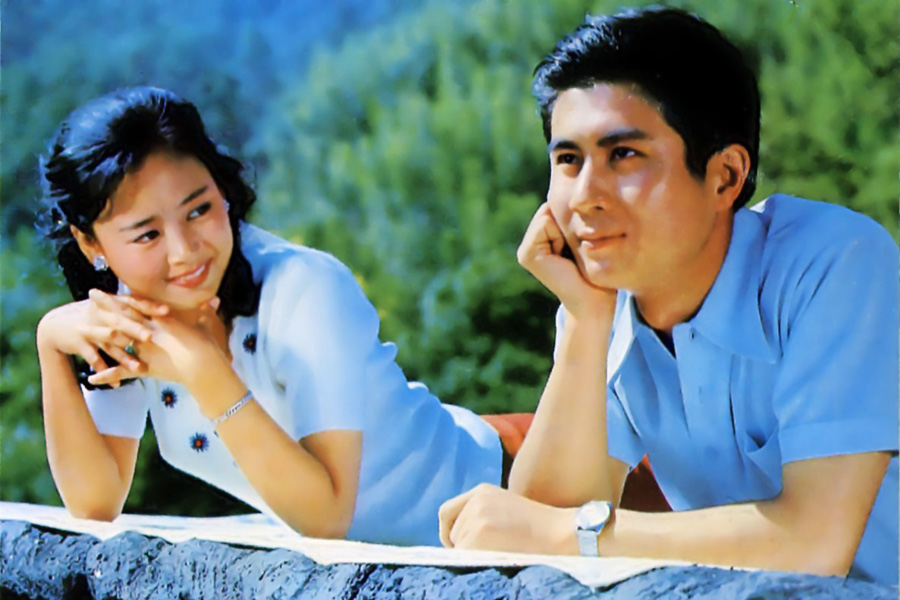
Romance on Lushan Mountain
Introduction
Romance on Lushan Mountain is a Chinese romantic drama film released in 1980. Directed by Huang Zumo, the film is set against the scenic backdrop of Lushan Mountain in Jiangxi province, China. The film was released during a transformative period in Chinese society. As the first film to feature a kissing scene after reform and opening-up policy in the late 1970s, it broke traditional taboos regarding on-screen intimacy, helping to pave the way for more open expressions of love and relationships in Chinese films. The film stars Zhang Yu and Guo Kaimin in leading roles and has become a cultural milestone. Its success marked a turning point in the Chinese film industry, highlighting the public's growing appetite for stories that reflected personal emotions and relationships.
Plot Summary
Set in the picturesque Lushan Mountain, the film tells the love story of a young Chinese man, Geng Hua, and an overseas Chinese woman, Zhou Yun. Their romance unfolds amidst misunderstandings and cultural differences, ultimately overcoming societal prejudices and personal doubts. The film's narrative is woven with themes of love, reconciliation, and the bridging of cultural divides, making it a resonant story for audiences of its time and beyond.
The film's use of natural light and expansive landscapes added to the romantic and dramatic tone of the narrative. The director's choice to focus on the natural environment as a character in its own right helped to elevate the emotional resonance of the story, making the film a visual and emotional experience.
Cultural Impact
Romance on Lushan Mountain quickly garnered a large following, becoming a nationwide sensation. Its depiction of romance and beautiful landscapes contributed to its status as a beloved classic. The film's influence extended beyond cinema, inspiring numerous artistic and cultural events, including the annual Lushan International Love Film Week. This event attracts filmmakers and audiences who celebrate the film's legacy and its thematic focus on love and human connection.
The legacy of Romance on Lushan Mountain endures through its continuous screening at a dedicated cinema on Lushan Mountain—an achievement that has earned it a place in the Guinness World Records for the longest first run of a film in a single cinema. The film's sustained popularity underscores its timeless appeal and its role in shaping modern Chinese cinematic narratives. The cinema itself has become a unique tourist attraction, drawing visitors who seek to experience the film's historic and romantic ambiance.








